UK Subscription Laws Guide (Including What Changes in 2026)
About 26% of UK consumers have ended up in a subscription they did not mean to sign up for or could not figure out how to cancel. That is roughly one in four people paying for something they did not want.
The law is also changing fast. The Digital Markets Competition and Consumers Act, known as the DMCC, is the biggest update to UK subscription rights since 2013, and parts of it are already in effect as of June 2026.
Here are the three most important things to know:
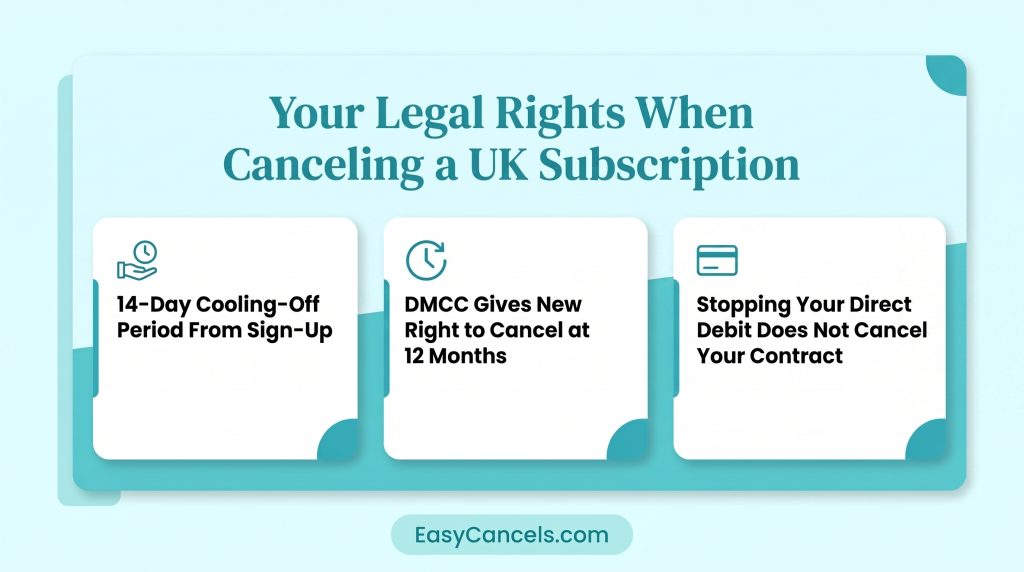
- You have a 14-day cooling-off period on most online subscriptions from the moment you sign up
- The DMCC gives you a new right to cancel at the 12-month renewal point, separate from your sign-up rights
- Stopping your direct debit at the bank does not cancel your contract, and doing it in the wrong order can cause problems
Traps Behind Accidental Subscriptions
There are three main reasons people end up paying for subscriptions they did not want:
- Auto-renewal with little to no warning
- Free trials that quietly turn into paid plans
- One-off purchases that secretly sign you up for recurring billing
Netflix, Amazon Prime, and gym memberships are the most common examples. You sign up for a free month, forget to cancel, and months later you are still being charged. Gyms are especially known for adding extra fees that were not clear at sign-up.
This is called a negative option subscription. Your inaction, not canceling, is treated as agreement to keep paying. This is exactly the problem the DMCC is designed to fix.
Cancellation Rights Under Current Law
The Consumer Contracts Regulations 2013 gives you a 14-day cooling-off period on any subscription you sign up for online, over the phone, or by mail order.
The countdown starts from the day the contract is formed, or the day you receive your goods if it is a product subscription.
This 14-day right applies when you first sign up. The new DMCC cooling-off period at renewal is a separate right that kicks in after 12 months. The two are not the same thing.
If you agreed to a subscription over the phone, your cancellation rights are the same as a written contract. The only problem is proving what was agreed, so always ask for written confirmation after any phone sign-up.
The Consumer Protection from Unfair Trading Regulations 2008 also bans misleading subscription terms and aggressive tactics that make canceling harder than it should be. If a company made the process deliberately confusing, that may already be a breach of the law even before the DMCC kicks in.
Subscriptions the New Rules Do Not Cover
The DMCC does not apply to everything. It does not cover:
- Utilities like gas, electricity, and water
- Insurance products
- Regulated financial services
- Medical prescriptions
- Childcare services
If your dispute involves one of these, contact the relevant ombudsman. That means the Energy Ombudsman for energy suppliers, the Financial Ombudsman Service for insurance and financial products, and Ofcom for telecoms.
DMCC 2026 Subscription Rules
The DMCC is the biggest update to UK subscription law since 2013. As of June 2026, businesses must follow four main rules:
- Give clear information about the subscription before you sign up
- Offer a cooling-off period at the point of renewal
- Send reminder notices at regular intervals
- Make cancellation simple with no unnecessary steps
Reminder Notices
Businesses must send a reminder after any free or introductory period ends, and then at least every six months after that. If a company only sends one notice at the start and nothing after, that is a breach.
The 12-Month Renewal Right
After your subscription has been running for a year, you get a right to cancel at renewal with a 14-day window. This is separate from the 14-day cooling-off period you get when you first sign up.
Drip Pricing Is Now Banned
Companies can no longer show a low price upfront and add hidden fees at checkout. If you were charged fees that were not visible at sign-up, write to the company and mention the DMCC drip pricing ban.
CMA Enforcement Powers and Penalties
Under the DMCC, the Competition and Markets Authority no longer needs to go to court to take action against businesses. It can act directly, which makes enforcement faster and more effective.
The fines are also tougher than most people realize. Companies can be fined £300,000 or 10% of their global annual turnover, whichever is higher.
★ The £300,000 minimum means even smaller businesses face serious consequences, not just big platforms.
The CMA has already said that subscription traps are an enforcement priority in 2026, which means businesses that do not follow the rules are more likely to face action than ever before.
Company Refuses to Cancel
UK law is clear on this. Businesses cannot make cancellation unreasonably difficult. It is not just bad practice, it is illegal.
Start by finding all your active subscriptions. Check your bank statements for recurring charges and search your email for terms like “free trial,” “subscription confirmed,” and “renewal notice.” This step alone often reveals charges you had completely forgotten about.
Once you find the subscription, follow this order:
- Look for the cancellation option in your account settings
- Send a formal cancellation request by email and keep a copy
- If the company ignores you, send a Letter Before Action mentioning the Consumer Contracts Regulations 2013 and the DMCC
Get the Order Right With Your Bank
Stopping a direct debit or Continuous Payment Authority at your bank does not cancel your contract. Always cancel with the merchant first.
Only contact your bank to block payments as a last resort, after you have notified the merchant in writing. Doing it the wrong way around can leave you in breach of contract and make a refund harder to claim.
Under FCA rules, you can instruct your bank to cancel a Continuous Payment Authority at any time but always cancel with the merchant first.
Escalating to the CMA or Ombudsman
If the merchant still refuses to act, follow this path:
Contact Citizens Advice at citizensadvice.org.uk or call 0800 144 8848 for free guidance
Submit a complaint through the CMA’s online complaints portal if the business is clearly breaking consumer law

Frequently Asked Questions
Can I Get a Refund If a Company Breaks DMCC Rules?
Yes. If a company fails to follow DMCC rules, such as not sending reminder notices or making cancellation deliberately difficult, you have grounds to dispute any charges. Contact the merchant first, then escalate to Citizens Advice or the CMA if they do not resolve it.
Can a Company Charge Me After a Free Trial?
Only if you were clearly told the trial would auto-convert to a paid plan and how to cancel before it happened. Under the DMCC, businesses must send a reminder before the trial ends. If no notice was given, the charge can be challenged. Contact the merchant first, then Citizens Advice if they do not resolve it.
Should I Stop Payment at My Bank?
Stopping a direct debit or CPA at your bank doesn’t cancel your contract, it only blocks the payment. Cancel with the merchant first in writing, and keep a copy. Only instruct your bank to block the payment if the merchant refuses to act or keeps charging after a valid cancellation request has been sent.
When Does DMCC Protect Me?
The DMCC covers consumer subscriptions signed up for or renewed after its 2026 start date. It does not cover utilities, insurance, financial services, medical prescriptions, or childcare. For subscriptions that do fall under it, you are entitled to reminder notices, a simple cancellation route, and a cooling-off period at your 12-month renewal point.